July 2026: Source checks and animated workflows
Vibing thoughts.
July was really two projects running side by side. On Gala Finder, I wanted a more reliable way to decide which websites to trust for swimming meet details, after a wrong date made it obvious the old approach wasn't enough. On Workflow Weaver, I spent the month getting the workflow films to behave like films, then adding a director that plans them before they play.
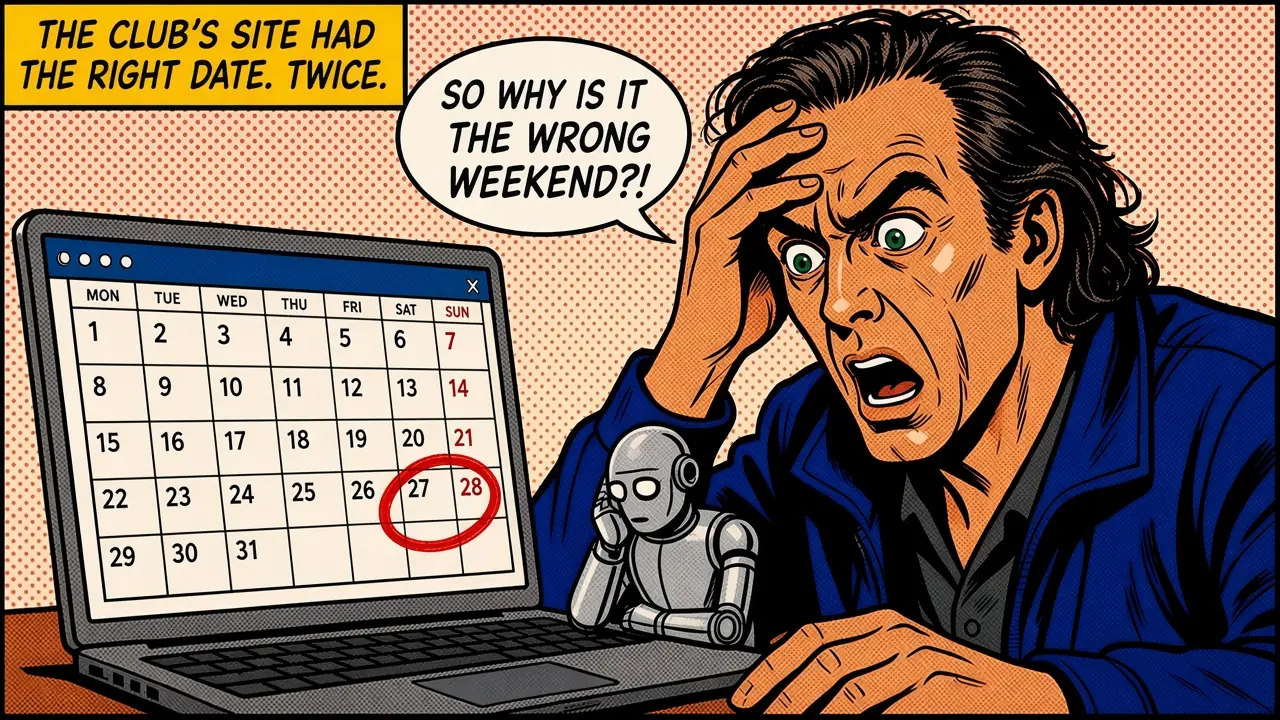
The date bug was a good teacher. One meet was listed on the wrong weekend, even though the club's own site had the right dates. The system had been given those dates twice and had thrown them away both times. That's worse than a one-off typo: it means a later, better source can lose to an earlier, worse one, and the page still looks confident. I had Claude fix it so a new discovery can correct a stored date, and so the page says when a date might still be uncertain rather than presenting a guess as a fact.
That pointed to a bigger gap. Gala Finder already had more than one service finding and fetching pages, but there wasn't a clear, staged way to rank those sources or to show me what had been trusted. I had Kiro Agent write a specification for a layered funnel: different providers search and fetch, the results are scored and recorded in a ledger (a running log of sources and claims), and the admin screen shows verification badges so I can see the trail. I then had that built in stages, starting with the contracts and adapters, then the ledger, then ingest and page parsing, then the admin screen.
A few details of that approach are worth spelling out. Fetching is locked down so the server will only retrieve ordinary web pages. It won't follow tricks that point at internal addresses. Features were reviewed as they landed, and the gaps those reviews found got fixed before the next stage. After the database migrations (the step-by-step changes to the database's structure) were applied in Lovable, the automatically generated types, which describe the database shape the app compiles against, no longer matched the code, and the live build broke. That got a same-day fix, with Claude doing the patch. Kiro Agent also added a privacy policy page, and fixed a bookmarklet (a tiny script you save as a browser bookmark) that imports rankings from Swim England, which had broken after their page changed. Lovable's agent cleared a search-engine audit on the public pages.
Workflow Weaver's films are drawn by Manim, a Python toolkit that turns code into animation. Early in the month the scenes were still fighting themselves: steps overlapped, titles scrambled as they appeared, and body text could shrink below a readable size. I had those bugs fixed, and I also had real video-output tests added, because earlier checks had missed this class of problem. I reviewed that work myself and sent some of it back when the tests or the wiring weren't tight enough.
I then turned the HyperFrames canvas, which is the layout that presents a workflow on screen, into a real animation, with a switch I could flip off if it misbehaved. I also required an explicit opt-in before a render used that new route, so it couldn't quietly become the default. Kiro Agent wrote a specification for a Story Director that plans the film, and I had that built with a player that can show the plan and the finished animation. A first attempt at fixing a startup crash was too blunt. My review caught that it would have switched off AI planning for anyone using their own API keys, which is when you paste in a key from an AI provider instead of using mine. The follow-up restored planning, and only showed a clear error when the plan was actually missing.
I also had Kiro Agent specify how Workflow Weaver should refresh the list of models for people who bring their own keys. I started with a cautious catalogue-only update for one provider, adding stable names for its models so a rename on their side doesn't break the catalogue. Separately, Workflow Weaver and Format Ferry share a payments account, so each app was being sent events meant for the other. A webhook is just a notification the payments provider sends when something happens: a payment, a subscription change, and so on. Both apps now ignore events that aren't theirs. Claude did that work. The Format Ferry change also stopped showing ads until consent is given.
There was some unglamorous plumbing too. A typo in a shared review workflow was breaking automated checks, and I patched that across a lot of projects on the same day. Workflow Weaver's main branch had also gone red over lint rules and a lockfile (the file that pins exact library versions) that had drifted out of date, which Kiro Agent sorted out.
If there's a common thread, it's that a feature isn't finished when it first works. It's finished when the bits that can quietly go wrong have been named and checked: dates that look authoritative, animations that pass tests but look a mess, and payment events that land in the wrong app.